


Most lists of quiet business ideas for introverts UK readers find online make an unhelpful promise: choose the right idea and you will hardly need to speak to anyone. That is not how a real business works. Customers ask questions, suppliers make mistakes and even a digital product needs marketing and support.
A better question is whether contact can be planned. Some people are comfortable with a booked video call but dislike an unexpected phone ringing all afternoon. Others enjoy serving one customer at a time, then want several uninterrupted hours to complete the work. The ideas below are assessed on that more realistic basis.
Introversion is not the same as shyness or social anxiety, and it does not mean disliking people. An introverted owner may be an excellent listener, negotiator or salesperson while still needing control over how much interaction fills the day. Your skills, interests and tolerance for uncertainty matter more than a personality label.
Quiet business ideas for introverts UK: comparison
The ratings describe a typical one-person version of each business. Your choices can change them. Publishing an enquiry form instead of a telephone-first process, for example, can make communication more predictable without making the service frustrating.
| Business idea | Telephone | Face to face | Written enquiries |
|---|---|---|---|
| Proofreading and copy-editing | Low | Low | Yes |
| Transcription and caption editing | Low | Low | Yes |
| Bookkeeping | Medium | Low | Mostly |
| Website maintenance | Low | Low | Yes |
| SEO audits and research | Low | Low | Yes |
| Digital templates | Low | Low | Yes |
| Print-on-demand shop | Low | Low | Yes |
| Niche online shop | Low | Low | Yes |
| Handmade products | Low | Low | Yes |
| Personalised vinyl products | Low | Low | Yes |
| Product photography | Low | Medium | Yes |
| Video editing | Low | Low | Yes |
| Online research service | Low | Low | Yes |
| Spreadsheet clean-up | Low | Low | Yes |
| Plant care visits | Medium | Medium | Partly |
| Laundry and ironing | Medium | Medium | Partly |
| Pet care with booked visits | Medium | Medium | Partly |
The second table covers visibility, home visits, estimated testing budget and whether the work can usually fit around employment.
| Business idea | Appear on social media | Customers visit home | Starting budget | Evenings or weekends |
|---|---|---|---|---|
| Proofreading and copy-editing | No | No | £0 to £150 | Yes |
| Transcription and caption editing | No | No | £0 to £100 | Yes |
| Bookkeeping | No | No | £100 to £1,000+ | Partly |
| Website maintenance | No | No | £0 to £300 | Yes |
| SEO audits and research | Optional | No | £0 to £500 | Yes |
| Digital templates | Optional | No | £0 to £150 | Yes |
| Print-on-demand shop | Optional | No | £0 to £200 | Yes |
| Niche online shop | Optional | No | £100 to £1,500+ | Partly |
| Handmade products | Optional | No | £50 to £1,000+ | Yes |
| Personalised vinyl products | Optional | No | £250 to £1,000+ | Partly |
| Product photography | No | Possibly | £50 to £1,500+ | Partly |
| Video editing | No | No | £0 to £1,500+ | Yes |
| Online research service | No | No | £0 to £100 | Yes |
| Spreadsheet clean-up | No | No | £0 to £150 | Yes |
| Plant care visits | No | No | £30 to £250 | Partly |
| Laundry and ironing | No | Avoidable | £50 to £500+ | Partly |
| Pet care with booked visits | Optional | No | £50 to £500+ | Partly |
The figures are broad testing budgets, not promises of what every person will spend. They assume you already own an adequate phone or computer where the work requires one. Insurance, training, professional membership, higher-specification equipment and stock can raise the cost considerably.
1. Proofreading and copy-editing
Proofreaders check spelling, punctuation, consistency and presentation. Copy-editing goes further by improving clarity, structure and tone. Possible clients include independent authors, training providers, charities, agencies and small organisations that produce reports or website content.
Most of the work is solitary and can be delivered through tracked changes or comments. A clear enquiry form can ask about word count, subject, deadline, file type and the level of editing required. That removes much of the early back-and-forth. You still need to clarify vague briefs and explain editorial decisions without sounding dismissive.
Contact snapshot: Telephone: Low. Face to face: Low. Written enquiries: Yes. Personal social media appearance: No. Customers visiting your home: No.
You can test demand with software you already have and two carefully prepared samples. Specialist courses may help you learn editorial conventions, but do not claim expertise in technical, legal or academic subjects you cannot assess. Budget roughly £0 to £150 for a basic website, style references or training. Find initial work through publishing communities, agencies and direct approaches to organisations whose material you genuinely understand.
2. Transcription and caption editing
Automatic transcription has changed this market, but it has not removed the need for accurate human checking. The service may involve correcting interviews, adding speaker names, editing subtitles, checking timings or preparing an accessible transcript from a recording.
Files and instructions can usually be exchanged online, so telephone and face-to-face contact are low. The difficult part is often concentration rather than communication: poor audio, unfamiliar accents, specialist terminology and tight deadlines can make a short recording take far longer than expected.
Contact snapshot: Telephone: Low. Face to face: Low. Written enquiries: Yes. Personal social media appearance: No. Customers visiting your home: No.
A headset and an existing computer may be enough to test the work. HappyScribe is one relevant option for automated transcripts and subtitles, but it is not a substitute for careful checking. Free trials, platform-generated captions or manual transcription may be sufficient at first. Never upload confidential recordings without checking the service’s privacy terms and obtaining the client’s agreement.
3. Bookkeeping for sole traders and small organisations
Bookkeeping can suit someone who likes orderly, recurring work and clear deadlines. Tasks may include recording transactions, reconciling bank accounts, organising receipts and preparing information for an accountant. It is not completely low-contact: clients may need onboarding, reminders and explanations when records are missing.
A monthly checklist, secure upload area and scheduled review call can keep the contact predictable. Avoid casual exchanges of financial documents through personal messaging accounts. Appropriate qualifications, professional-body requirements, anti-money-laundering obligations, insurance and data security need proper research before offering the service.
Contact snapshot: Telephone: Medium. Face to face: Low. Written enquiries: Mostly. Personal social media appearance: No. Customers visiting your home: No.
Starting costs vary from about £100 for basic training and secure tools to well over £1,000 where qualifications, memberships and specialist software are required. Test your interest by learning the workflow and helping with non-confidential practice records, not by taking responsibility for a real client before you are competent.
4. WordPress website maintenance
A maintenance service might cover updates, backups, broken-link checks, content changes and routine performance monitoring. Work can normally be requested through a ticket or form, making unscheduled calls unusual. Emergencies create the main exception. A broken checkout or hacked website cannot always wait until tomorrow.
Define precisely what your plan includes, how quickly you respond and what counts as development rather than maintenance. Use secure password-sharing and keep tested backups. You should also be honest about the platforms and plugins you know.
Contact snapshot: Telephone: Low. Face to face: Low. Written enquiries: Yes. Personal social media appearance: No. Customers visiting your home: No.
If you already have the skills and a suitable computer, the first test may cost very little. Hosting, monitoring and backup services can raise the ongoing cost. A small portfolio site and one carefully supported test client are more convincing than a long list of vague services. This idea suits evenings only if your agreement does not promise immediate daytime support.
5. SEO audits and keyword research
An SEO audit identifies problems affecting how a website can be understood, indexed and used. A focused service could examine page titles, internal links, search intent, local listings or content gaps rather than promising to “do SEO” in general.
Clients can complete a structured brief and receive a written report or recorded walkthrough. Some will still want a call before buying, especially when the work is expensive. You do not need to appear on social media, but publishing clear examples and explaining your method helps establish credibility.
Contact snapshot: Telephone: Low. Face to face: Low. Written enquiries: Yes. Personal social media appearance: Optional. Customers visiting your home: No.
Free search results, Search Console and spreadsheets can support an entry-level audit. Paid research platforms such as Moz become more useful when their data saves regular time across paying clients. Check current plans before quoting them as a cost. Do not guarantee rankings, and protect any analytics or customer information you are allowed to access.
6. Digital templates
Digital templates turn a repeatable structure into a downloadable product. Examples include budgeting sheets, content planners, checklists, presentation layouts and administrative forms. The quiet appeal is obvious: the product can be made independently and delivered automatically.
The less obvious part is support. Customers may struggle with instructions, compatibility or downloads, and marketplaces may require prompt replies. Good screenshots, a short guide and a clear description reduce those enquiries. Marketing can show the template itself, so there is normally no need to appear on camera.
Contact snapshot: Telephone: Low. Face to face: Low. Written enquiries: Yes. Personal social media appearance: Optional. Customers visiting your home: No.
Canva and spreadsheet software provide low-cost starting points, but check that fonts, photographs, elements and templates may be used in products sold to others. Begin with one narrow problem you understand rather than a bundle of fifty generic pages. Costs may stay below £150 until you add marketplace fees, advertising or premium assets.
7. Print-on-demand products
Print-on-demand services produce and dispatch an item after it sells. You create the design and listing, while the supplier handles printing. This reduces stock and packing work, but it does not remove customer service, returns or responsibility for what you advertise.
Contact is mainly written. Social media appearance is optional because you can photograph products, show designs or create demonstrations without appearing personally. The bigger challenges are crowded marketplaces, narrow margins and inconsistent samples.
Contact snapshot: Telephone: Low. Face to face: Low. Written enquiries: Yes. Personal social media appearance: Optional. Customers visiting your home: No.
Test one small collection and order samples before promoting it. Shopify can support a standalone shop, while Etsy and other marketplaces may provide an existing audience. A normal editorial link to Shopify is appropriate here, but a paid ecommerce plan is unnecessary until you understand product costs, platform fees, returns and likely traffic.
8. A tightly focused online shop
A niche shop sells a small, coherent range for a particular customer or use, rather than collecting unrelated products. Quiet work includes researching suppliers, writing listings, photographing stock and packing orders. Customer questions and delivery problems remain part of the job.
Email and forms can handle most enquiries, but written policies must be clear. You will need a returns process, accurate delivery information and a safe way to keep customer details. Keeping stock at home does not mean customers need to visit.
Contact snapshot: Telephone: Low. Face to face: Low. Written enquiries: Yes. Personal social media appearance: Optional. Customers visiting your home: No.
A cautious test might cost £100 to £500 for samples and a small quantity of stock, while a broader launch can exceed £1,500. Start on a suitable marketplace or with a small hosted shop, then measure actual margin after packaging, payment fees, returns and postage. Do not buy a large order simply to obtain a lower unit price.
9. Handmade products
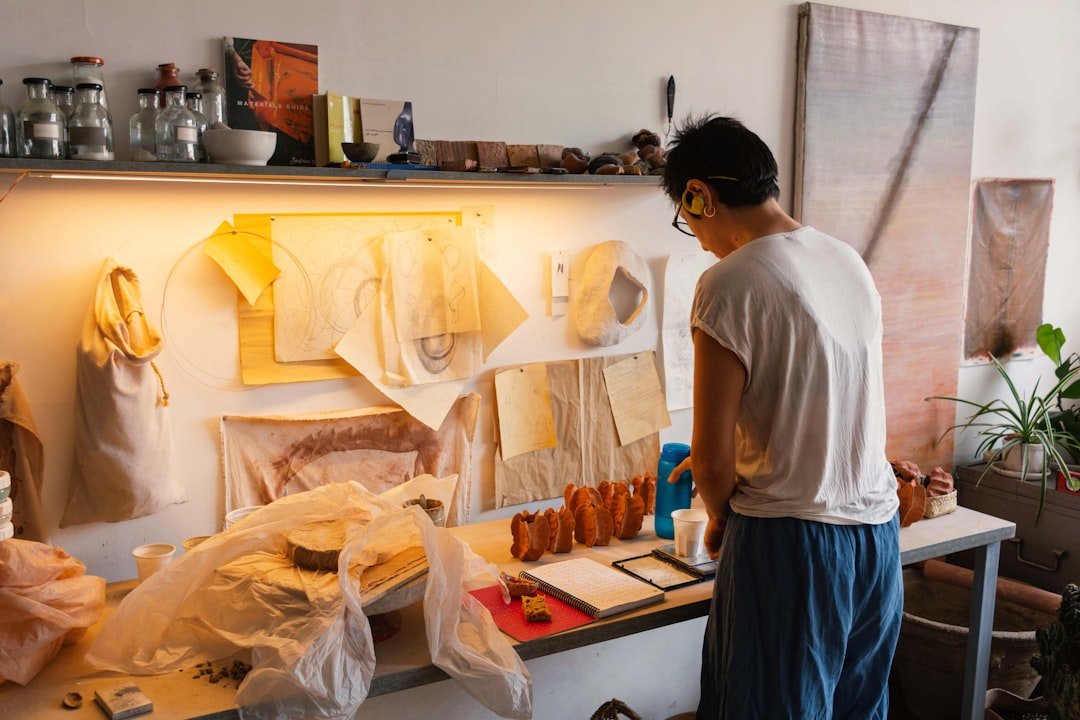
Jewellery, paper goods, ceramics, textiles and other handmade items can provide absorbing independent work. Selling them is less quiet than making them. You must answer questions, photograph products, arrange delivery and occasionally discuss custom work.
Standard designs and clearly stated options keep communication manageable. Fully bespoke commissions require more discussion and approval, so decide whether the extra margin justifies the contact. Customers do not need to enter your home if sales and collections are organised elsewhere.
Contact snapshot: Telephone: Low. Face to face: Low. Written enquiries: Yes. Personal social media appearance: Optional. Customers visiting your home: No.
Use materials already available to make a tiny sample range. Creativebug can provide structured art and craft classes, although learning a technique is different from developing a safe, saleable product. Expect £50 to £1,000 or more depending on materials and equipment. Check product-safety, labelling and intellectual-property rules relevant to what you make.
10. Personalised vinyl and heat-transfer products
This business adds names, lettering or approved designs to items such as bags, clothing, labels and signs. Production can be quiet and methodical, but personalisation creates detail-heavy customer contact. A spelling error or unclear colour choice can make an item unusable.
Use an order form with exact spelling, size, colour and proof approval. That is better for both parties than trying to reconstruct instructions from scattered messages. Social media can show the making process without showing your face.
Contact snapshot: Telephone: Low. Face to face: Low. Written enquiries: Yes. Personal social media appearance: Optional. Customers visiting your home: No.
A cutter, press, blanks and materials may take the realistic test budget from about £250 to over £1,000. HTVRONT is one supplier of relevant equipment and materials. Compare it with other suppliers, allow for waste and test the workflow before buying at scale. Never use copyrighted characters, logos or artwork without appropriate permission.
11. Product photography
Small sellers need clear photographs for websites, marketplaces and catalogues. You could specialise in simple products that are posted to you, reducing client meetings. Larger or valuable items may require collection, delivery or work at the customer’s premises.
A written shot list, style references and an approval stage make contact predictable. Customers should not visit your home unless your insurance, privacy and workspace arrangements make that appropriate. A courier-based model can avoid it.
Contact snapshot: Telephone: Low. Face to face: Medium. Written enquiries: Yes. Personal social media appearance: No. Customers visiting your home: Possibly.
Begin with a phone or camera you already own, daylight, card backgrounds and a few objects. Spending can range from £50 for basic surfaces and reflectors to more than £1,500 for lighting, lenses and calibrated editing equipment. Build a small portfolio that shows consistency, not just one unusually good image.
12. Video editing
Editors turn raw footage into clear videos, adverts, demonstrations or social clips. The work itself is independent, but the brief and revision process can be communication-heavy when expectations are vague. A detailed form should ask about length, platform, examples, captions, brand assets and the number of revisions.
Most clients can work through file sharing and email. You do not need to appear in the finished content. The main practical costs are a capable computer, storage, backups and licensed music or assets.
Contact snapshot: Telephone: Low. Face to face: Low. Written enquiries: Yes. Personal social media appearance: No. Customers visiting your home: No.
CapCut offers accessible editing and caption tools, while Adobe, DaVinci Resolve and InVideo suit different workflows. Start with free software where it handles the job. Check export, commercial-use and asset-licensing terms before accepting paid work.
13. Online research services
A research service finds, checks and organises information for businesses, writers, charities or consultants. A useful offer is specific: competitor summaries, supplier shortlists, policy scans or source packs. “I can research anything” is difficult to trust and price.
The client can submit a written brief and receive a spreadsheet or report. One scheduled clarification may prevent hours of work in the wrong direction. You need sound judgement about source quality, confidentiality and what you are qualified to interpret.
Contact snapshot: Telephone: Low. Face to face: Low. Written enquiries: Yes. Personal social media appearance: No. Customers visiting your home: No.
Start-up costs can be close to zero if public sources and existing office software are sufficient. Paid databases may be worthwhile in specialist fields, but only when clients value the access. Never present a quick web search as professional legal, medical or financial advice.
14. Spreadsheet clean-up and data organisation
Many small organisations have duplicated contacts, inconsistent dates, broken formulas and lists that nobody trusts. A defined clean-up service can standardise fields, remove agreed duplicates, document formulas and create a usable summary.
The work is quiet, but it may involve sensitive personal or commercial information. Use secure transfer, collect only what is necessary and agree what will be deleted afterwards. The ICO advises small organisations to understand what personal data they hold and why they need it.
Contact snapshot: Telephone: Low. Face to face: Low. Written enquiries: Yes. Personal social media appearance: No. Customers visiting your home: No.
Excel, Google Sheets or LibreOffice may be enough to test the service. Costs usually remain under £150 unless specialist software or training is required. Create realistic sample datasets rather than displaying a client’s information in your portfolio.
15. Plant care for offices and people who are away
Plant care may involve scheduled watering, feeding, pruning and basic monitoring in homes or workplaces. The work is usually solitary once access is arranged, but the initial visit, keys and security instructions involve trust and face-to-face contact.
This is quieter than many local services, not contact-free. Offices may have staff present, and a plant problem may require an update. A booking form can gather plant numbers, location, access, dates and known issues, followed by one arranged conversation.
Contact snapshot: Telephone: Medium. Face to face: Medium. Written enquiries: Partly. Personal social media appearance: No. Customers visiting your home: No.
Basic tools and transport might put a test budget around £30 to £250. Insurance, key cover and travel raise the cost. Start within a compact area and price the journey as well as the visit. Avoid presenting yourself as able to diagnose every disease unless you have the knowledge.
16. Laundry or ironing with arranged collection
A collection-based ironing or laundry service can keep customer contact brief and scheduled. Orders, preferences and payment can be handled through a form, but collections, missing items, stains and delays still require conversation.
Do not invite customers into your living space. Use doorstep collection, agreed time windows or another suitable handover point. Consider ventilation, electricity, fire safety, storage, insurance and whether a tenancy or local rules affect the activity.
Contact snapshot: Telephone: Medium. Face to face: Medium. Written enquiries: Partly. Personal social media appearance: No. Customers visiting your home: Avoidable.
A small ironing-only test may use equipment you already own plus rails, covers and labels, while a fuller service can cost several hundred pounds or more. Calculate energy, products, damaged-item risk, collection time and rework before setting a price. A low headline price can become poor value very quickly.
17. Pet care built around booked visits
Cat visits, small-animal care and selected dog services can offer long stretches of independent work. The animal is the focus, but owners need to trust you with access, routines and emergencies. Initial meetings are usually sensible and some clients prefer telephone updates.
A form can collect routines, veterinary details and permissions, but it should not replace a proper handover. Decide which animals, areas and situations you will accept. Social media is optional, and photographs of customers’ homes or pets require permission.
Contact snapshot: Telephone: Medium. Face to face: Medium. Written enquiries: Partly. Personal social media appearance: Optional. Customers visiting your home: No.
Budget roughly £50 to £500 or more for insurance, checks, secure key systems, travel supplies and relevant training. Rules can vary by activity and location, particularly for boarding or day care. Check your council’s current requirements rather than assuming every pet service is treated the same.
How to build quieter communication into the business
The business model matters as much as the idea. A proofreader who insists on discovery calls may spend more time speaking than a plant-care provider with fixed routes and a clear form. Good systems should give customers confidence, not make it difficult to reach you.
- Publish a detailed service page explaining price, scope, turnaround and exclusions.
- Use an enquiry form that asks only for information needed to assess the work.
- Offer bookable calls instead of answering every unscheduled call.
- Confirm decisions in writing, especially prices, spellings, deadlines and revisions.
- Create templates for booking confirmations, progress updates and common questions.
- State realistic response hours rather than appearing permanently available.
- Provide a telephone option when urgency, accessibility or the service makes it appropriate.
Forms can reduce repetition, but a twenty-question form before someone can ask a simple question is a barrier. Start with name, contact details, what they need and any genuinely necessary specification. The ICO advises businesses to collect only the personal information they need and to make privacy information available when details are collected.
Do you need to appear on social media?
No. Many businesses can market through finished work, screen recordings, photographs, diagrams, written explanations and customer reviews used with permission. A human presence can build trust, but that does not always require your face. A calm voiceover, hands demonstrating a process or a detailed article may be more useful than frequent talking-head videos.
Do not let avoidance create weak marketing. Customers still need evidence that you understand the problem and can deliver. Choose a format you can sustain. For video, captions improve access and help people watching without sound. Editing tools can assist, but every caption should be checked.
Working from home without customer visits
A home-based business does not automatically require customers to know where you live or enter the property. Digital delivery, courier collection, postal returns and meetings in suitable public or hired spaces can separate home from customer-facing activity.
Your legal business information and address obligations depend on the structure and where you sell. Do not promise that an address can always remain private. GOV.UK also warns that home businesses may need permission from a landlord, mortgage provider, council or planning authority, and ordinary home insurance may not cover stock, equipment or customer visits. In Scotland, questions about non-domestic rates go to the local assessor.
Choosing the right quiet business
Choose the kind of contact you can manage, not simply the idea with the lowest rating. Written customer service can be draining when it is constant and unpredictable. A scheduled one-hour meeting followed by a week of focused work may feel quieter than hundreds of marketplace messages.
- Which tasks could I do well for several hours without supervision?
- Would I rather serve a few higher-value clients or many product customers?
- Can I explain the service clearly in writing?
- What contact is genuinely necessary for safety, trust or quality?
- Can I test the idea without a large annual subscription or stock order?
- Does my home, tenancy, insurance and available storage suit it?
- What will I do when a customer wants a phone call or something goes wrong?
If you are still comparing options, read 15 businesses you could start this weekend in the UK. Once you have a shortlist, our guide to essential tools to start a small business in the UK will help you avoid paying for software before it solves a real problem.
What the contact ratings do not tell you
A low telephone rating does not necessarily mean a low-pressure business. An online shop may receive many short written questions, while a bookkeeper may have one planned client call followed by several days of independent work. Think about frequency, urgency and emotional demand as well as the communication channel.
It is also worth separating customer contact from other interaction. Marketplace sellers deal with couriers and platforms. Product makers speak to suppliers. Local services may arrange access with neighbours, reception staff or family members. None of this makes the idea unsuitable, but it belongs in an honest assessment.
Your confidence may change with familiarity. A scheduled call about work you understand can feel very different from an unexpected sales call. Build scripts, forms and boundaries to remove avoidable uncertainty, then keep enough flexibility to help a customer who cannot use your preferred route.
How much should you spend before testing an idea?
Spend first on anything required for safety, legality or competent delivery. Delay branding packages, annual software plans and large stock orders until a real test shows that people will pay. For a digital service, the test may be a tightly defined offer and a sample. For a product, it may be three finished items, accurate costing and a small number of listings.
Record every cost, including marketplace charges, payment fees, postage, consumables, travel and the time spent correcting mistakes. A business can look inexpensive because the owner has ignored equipment already owned or hours of unpaid work. That does not mean every test must recover its full cost, but you need honest figures before deciding whether to continue.
A free tool is sensible when it produces acceptable work and its terms allow commercial use. Upgrade when a paid feature removes a repeated obstacle, protects important information or creates a benefit a customer will value. The cheapest test is one that answers a real question about demand, not one that merely keeps you busy.
Frequently asked questions
Can an introvert run a successful business?
Yes. Running a business requires communication, judgement and follow-through, but none of those qualities belongs to one personality type. The useful approach is to design contact around the customer’s needs and your capacity, rather than pretending you will never need to speak.
Which businesses involve the least telephone contact?
Proofreading, transcription, digital templates, spreadsheet work and some forms of video editing can usually be organised in writing. Clients may still request calls, so state how enquiries and support work before they buy.
Can I run a business without appearing on social media?
Yes. You can show products, processes, screen recordings and useful written content. Some clients value seeing the owner, but personal appearance is not compulsory for most ideas in this guide.
Which quiet businesses can I start from home?
Most digital services and products can be started from home with suitable equipment and data security. Product and local-service ideas need additional thought about stock, noise, deliveries, insurance and permissions.
Do I need to give customers my home address?
Not necessarily in every conversation, but businesses can have legal address and disclosure obligations depending on their structure, platform and sales method. Obtain proper advice before claiming that your address can remain hidden.
How can I avoid unscheduled calls?
Publish clear contact options, let customers book call times and use a short enquiry form. Do not remove telephone access where the service, urgency or an accessibility requirement makes it important.
Which idea can I test alongside a job?
Proofreading, transcription, templates, research, spreadsheet work and editing can often be delivered to agreed deadlines outside office hours. Avoid services that promise immediate support while you are unavailable.
Are product businesses quieter than services?
Production may be quiet, but product sellers handle questions, delivery problems and returns from more customers. A service can involve fewer people but deeper communication. Compare the whole customer journey.
The strongest option is rarely the one with the fewest conversations. It is the one where you can do good work, communicate reliably and recover enough quiet time to keep doing it well.